
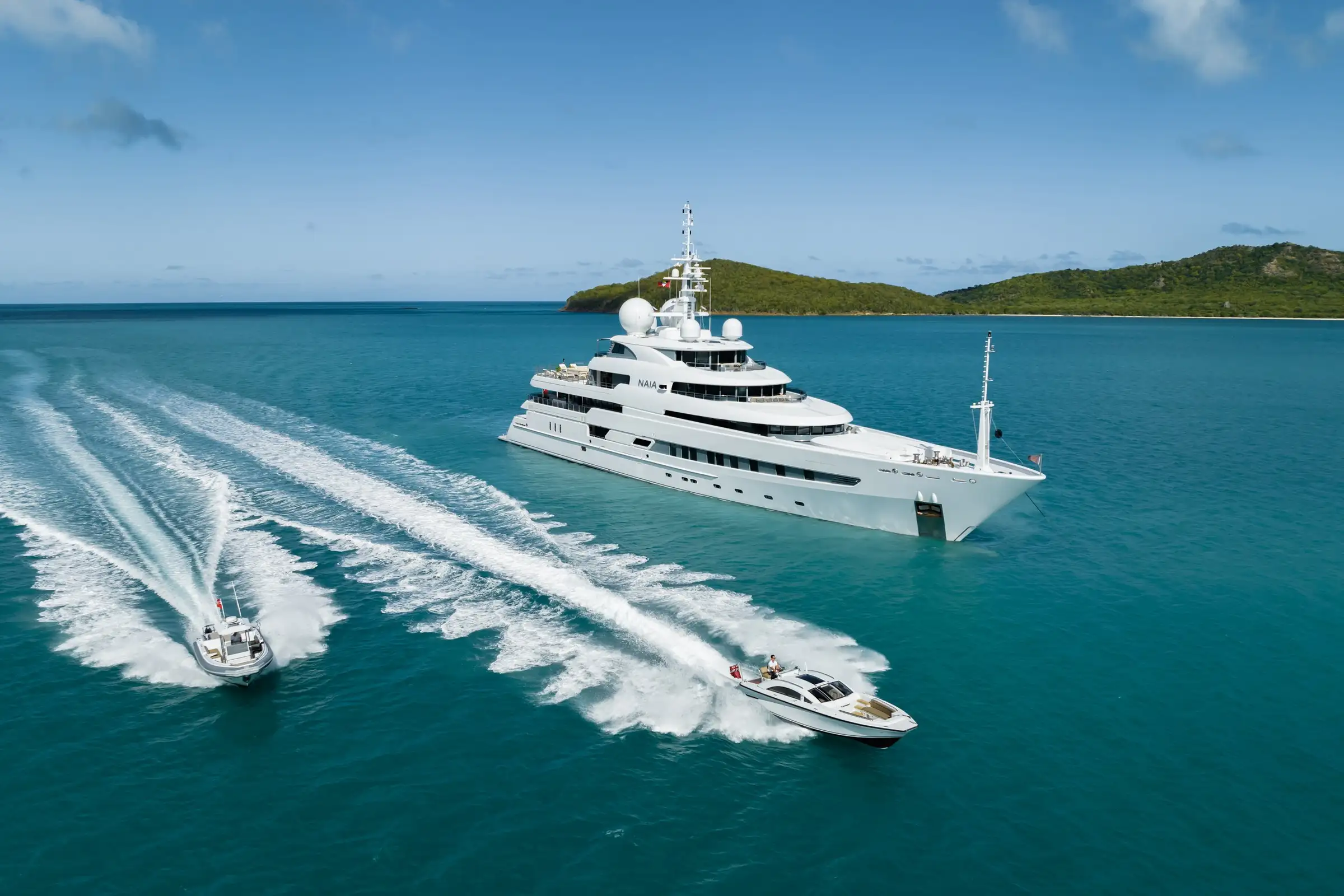
73.6 m · Freire Shipyard · 2011
NAIA
12 guests · 8 cabins
Motor yacht for charter
From € 595,000 per week
Croatia, Greece, Montenegro, Corsica, France, Sardinia, Italy, Ibiza, Mallorca, Menorca, Spain
For charter
View NAIA →
Yacht charter
Range, self-sufficiency and the tenders to reach places few yachts go.
On Lund Group, explorer is a verified capability, not a style. Every yacht shown comes from our active published inventory; dates, rates and availability are confirmed in writing.
2 verified explorer listings
73.6 m · Freire Shipyard · 2011
12 guests · 8 cabins
Motor yacht for charter
From € 595,000 per week
Croatia, Greece, Montenegro, Corsica, France, Sardinia, Italy, Ibiza, Mallorca, Menorca, Spain
For charter
View NAIA →
 Featured
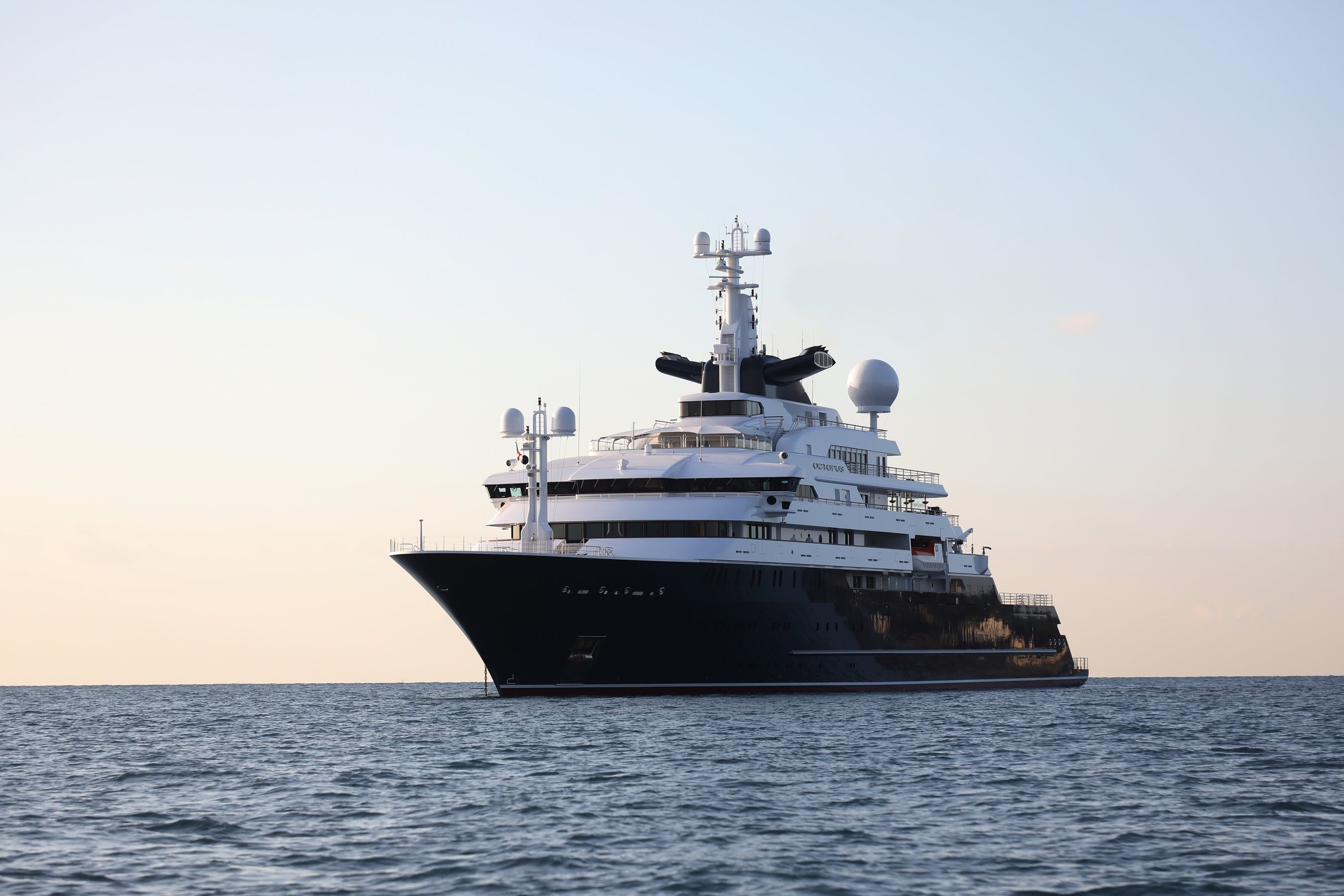
126.2 m · Lurssen · 2003
12 guests · 13 cabins
Motor yacht for charter
From $2,200,000 / week
Australia, French Polynesia, New Zealand, Papua New Guinea, Indonesia, Malaysia, Thailand, South America, Antarctica
For charter
View OCTOPUS →
Recorded facts only; blank items are not shown. Bigger is not automatically better — the right explorer depends on where and how you want to travel.
| NAIA | OCTOPUS | |
|---|---|---|
| Length | 73.6m | 126.2m |
| Builder | Freire Shipyard | Lurssen |
| Built / refit | 2011 | 2003 |
| Guests / cabins | 12 guests · 8 cabins | 12 guests · 13 cabins |
| Ice class | 1D | — |
| Polar operation | not verified | — |
| Helipad | commercial | yes |
| Dive centre / chamber | — | dive centre, hyperbaric chamber |
| Submersible / ROV | — | ROV |
| Charter areas | Croatia, Greece, Montenegro, Corsica, France, Sardinia, Italy, Ibiza, Mallorca, Menorca, Spain | Australia, French Polynesia, New Zealand, Papua New Guinea, Indonesia, Malaysia, Thailand, South America, Antarctica |
Charter areas are published cruising regions, not a current position or date availability. Ice class is not polar operating approval.
Your choices are added to your enquiry.
Fuel capacity and efficient cruising let a yacht cover long distances between ports. Range shows where a yacht is able to go, not where she is offered for charter.
Watermakers, cold and dry storage, waste handling and power generation let a yacht stay away from marinas for longer. We show these only when the yacht records them.
Onboard workshops, spare parts and duplicated critical systems matter far from shipyards. Ask us to confirm them in writing for remote itineraries.
Expedition days happen in the tenders. The number, size and type of tenders, and any landing craft, often matter more than the yacht's length.
A commercially certified helideck and a touch-and-go pad are different things. A helipad never replaces aircraft, pilot, airspace, weather and local approvals.
A dive centre, a hyperbaric chamber, a submersible and an ROV are separate capabilities. A submersible carries people; an ROV is a remotely operated camera vehicle.
Some explorers support scientists, camera crews and research equipment. This is arranged for each charter and is never assumed.
Ice class describes how a hull is built for ice conditions, under a specific classification society's rules. Notations differ and must be read in full.
Operating in polar waters can require separate certification, documents, crew training and permits. An ice-class hull does not prove any of these.
Most expedition charters take place in warm or temperate remote regions. A yacht can be an excellent explorer and never be offered for polar charter.
Where a yacht could go, where she charters, and where she is right now are three separate facts. We confirm each in writing.
Indonesia, French Polynesia, Papua New Guinea and similar archipelagos, where distances and diving support matter.
Northern coastlines and fjord regions with long summer daylight and changeable weather.
Antarctica and the Arctic: short seasons, strict environmental rules and permits. Assessed yacht by yacht.
The Mediterranean and Caribbean with longer tender expeditions, diving and quieter anchorages.
These are regions explorers can suit. They are not claims that any listed yacht is scheduled there.
An explorer is a yacht built or equipped for long-range, self-sufficient cruising. Expedition describes the trip: a planned remote itinerary with guides, permits and contingency.
ExploreMost explorers are motor yachts, but most motor yachts are not explorers. Explorer is a capability, not a propulsion type.
ExploreSuperyacht describes size. An explorer can be any size; capability is what counts, and bigger is not automatically better.
ExploreOwnership raises different questions: range, refits, class status and resale. See explorer yachts for sale.
ExploreProtected areas, wildlife distances, anchoring limits and waste rules apply in remote regions, often more strictly than near cities.
Many remote coastlines need permits for landings, diving, drones or fishing. Some are limited to set numbers of visitors.
The captain and expedition leader decide what is safe each day. Weather, ice and sea state shape the itinerary.
Explorer charters plan for spare days, alternative anchorages and changes to flights. No itinerary is guaranteed.
Expedition leaders, naturalists, dive instructors and local guides can be added for each charter.
Remote medical support, evacuation planning and insurance are reviewed for the itinerary.
Some regions need security planning. We can coordinate Lund Group private security where appropriate.
Remote embarkations often start with a private jet and a helicopter or seaplane transfer. We arrange both.
A delivery passage moves the yacht between regions. It is not a leisure charter, and guests are not normally aboard.
If a yacht must travel to meet you, delivery and fuel may be charged. We explain this before any offer.
Fly in by private jet, embark at a regional port, then days of diving, tender exploration and remote anchorages, subject to permits and weather.
Short sea passages, long tender days, wildlife watching and shore walks with guides, with spare days for weather.
A published rate is never the total cost. Each yacht and itinerary is quoted in writing.
The weekly rate for the yacht and crew, quoted in writing for your dates.
An advance for running costs. Long-range itineraries usually use more fuel, so the APA is often higher.
Charged when the yacht travels to meet your itinerary.
Guides, specialists, permits and park fees are added as needed.
Private jet, helicopter and seaplane transfers are quoted separately.
Travel insurance, applicable VAT or charter tax and a crew gratuity at your discretion.
You tell us dates, guests, regions and how adventurous you want to be.
We search for yachts with the capabilities your trip needs, not just a label.
We verify range, equipment, approvals, position and terms with each yacht's representatives.
You receive three to five reasoned options, with costs explained.
A yacht built or equipped for long-range, self-sufficient cruising, with features such as long range, extra storage, capable tenders and support systems. On Lund Group it is a verified classification, not a style.
Often used interchangeably. We use explorer for the yacht and expedition for the type of trip.
No. A rugged look does not make a yacht an explorer, and some explorers look like conventional motor yachts.
No. Capability matters, not length.
The page shows the current number from our active published inventory. We can also search the wider charter market for you.
No. Polar charter needs suitable hull, approvals, permits, experience and a season. We check each yacht individually.
A hull notation from a classification society describing construction for ice. It is not polar operating approval.
We do not offer NAIA for polar charter. Her published charter areas are shown on her profile.
The distance a yacht can travel on its fuel at a given speed. It shows capability, not charter availability.
A yacht's current position changes and is separate from her charter areas. We confirm it when you enquire.
Terms vary. A commercially certified helideck meets stricter standards than a touch-and-go pad. Neither guarantees flights in every country.
No. Aircraft, pilot, airspace, weather and local approvals apply each time.
A submersible carries people underwater; an ROV is an unmanned camera vehicle operated from the yacht.
Some do. We show it only when the yacht records it, and dive plans depend on certification and local rules.
It supports treatment of certain diving injuries. Its availability and operation must be confirmed for each charter.
Often, by arrangement. Equipment, cabins, permits and insurance are agreed in advance.
For remote and polar itineraries, usually yes. For adventurous days in familiar regions, it is optional.
No. Remote places often have stricter environmental and permit rules.
Only where local rules and permits allow, and as the captain decides.
Fishing rules and licences vary by region. Some protected areas ban it.
No. Weather, sea state, ice and permits decide each day. We plan spare days.
Base rates vary by yacht. Long-range fuel, positioning, guides and aviation can add significant cost, explained in writing.
An advance for running costs such as fuel, food and port fees, reconciled at the end.
Not normally. A crossing is a repositioning voyage, not a leisure charter.
Many are, thanks to space and tenders. Safety, medical support and itinerary pace are reviewed for children.
Yes. Private jet, helicopter and seaplane transfers to remote embarkations can be arranged.
Remote and polar charters often need many months for permits, positioning and teams.
We do not claim hidden inventory. We search the charter market and verify each option.
Use the private search form. Tell us your dates, guests and how adventurous you want to be; we reply with three to five reasoned options.
Yes. Refits can change range, equipment and class status, so we check them for remote plans.
Your adventure level, trip style and needs from above are already added to your brief.