
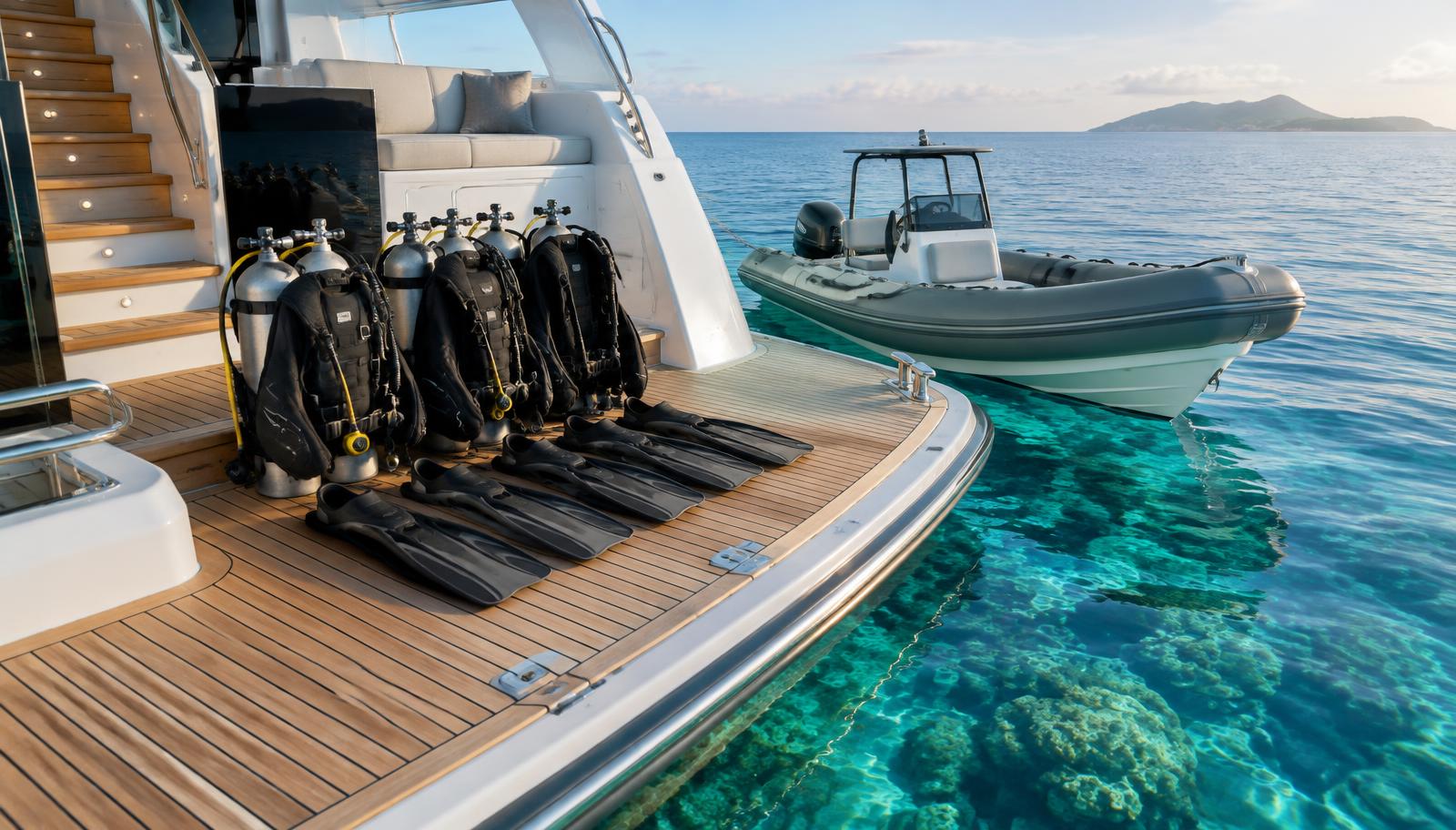
A Private Yacht Built Around What Is Under the Water
Diving Yacht Charter
We do not call a yacht a "dive yacht" just because it carries masks and fins.
How we work
We verify the dive set-up, not just the label
The yacht is the base
A private crewed yacht is not a commercial liveaboard. It carries your group only, and the dive programme is built around your level, pace and destination.
Verified separately
Dive centre, compressor, nitrox, instructor and permits are each checked. A yacht appears here only when at least one has been verified.
Divers and destination
The right yacht must match both the divers aboard and the waters you want to dive — draft, tender, range and local rules all matter.
Verified yachts
Yachts with verified diving set-ups
Must have
Tell us who is diving and where. We'll verify the yacht.
Share your dates, region, each diver's certification and what you need — compressor, nitrox, instructor. We confirm the real dive set-up, staff qualifications and permits before sending a shortlist.
Plan a Diving CharterYacht style
Which yacht style fits your diving charter?
Explorer yacht
Range, tender capacity and often a full dive centre — suited to remote reefs and longer passages.
Large motor yacht
Comfort, space for gear and often a compressor. Works well with a local operator in established dive regions.
Catamaran
Shallow draft and easy water access — good for reef areas like the Bahamas and Exumas.
Sailing yacht
Quiet and close to the water; usually lighter dive facilities, often paired with a local operator.
Bigger is not always better for diving: tender capacity, platform access, draft and the dive set-up matter more than length.
Equipment
A dive centre is not a box of gear
Some yachts have a dedicated dive room with a compressor, nitrox membrane, tank storage, rinse tanks and a full set of rental equipment. Others carry snorkelling gear and can host a visiting operator. We list which — never just "diving available".
A compressor aboard means tanks can be filled between dives without returning to shore. Nitrox is listed only where the yacht can blend it and a qualified person is aboard to analyse it.
People
Instructor, guide or local operator
A crew dive instructor or divemaster is listed only when their qualification is current and confirmed. Many yachts instead work with a licensed local dive operator who joins with their own boat, guides and equipment.
Local operators are independent of the yacht's crew. We never present them as permanent crew, and in many regions they are the legal or practical requirement.
Certification
New divers and certified divers
Every diver dives within their certification. Experienced divers can plan deeper or wreck dives with the right staff; beginners can try supervised introductory dives or complete a course where a qualified instructor is aboard or ashore.
Tell us each diver's level, logged dives and last dive date. Divers who have not dived recently may be asked to complete a refresher.
Permits
Local permits and marine parks
Many of the best dive areas are protected. Marine-park fees, dive permits, mooring rules and no-anchoring zones vary by country and are confirmed for each itinerary. Some areas allow diving only with a licensed local operator.
We do not promise access to any specific site. Permissions, weather and the captain's judgement decide each day.
Safety
Safety and emergency planning
Before the charter we confirm emergency oxygen aboard, the nearest recompression facility, evacuation options and the dive staff's emergency procedures. Dive insurance is strongly recommended.
Medical fitness is each diver's responsibility. Divers may be asked to complete a medical questionnaire; anyone with a health concern should consult a doctor before travelling. Flying after diving requires a surface interval — we plan departure days around it.
Snorkelling
Snorkelling and freediving
Not everyone aboard needs to dive. Snorkelling from the tender or the swim platform is often the best part of the day for non-divers and children. Freediving is arranged only with a qualified freediving instructor.
Photography
Underwater photography
Some dive staff are experienced underwater photographers; specialist photographers can also join. We confirm camera rinse and charging space aboard.
Diving styles
Reef, wreck and big-animal diving
Reef diving suits most levels. Wreck diving often needs advanced certification and, for penetration, specialist training. Pelagic and big-animal encounters depend on season and are never guaranteed — we describe what is typical, not what is promised.
A sample day
What does a dive day look like?
- 07:30Briefing with the dive staff after a light breakfast.
- 08:30Morning dive from the tender or platform.
- 10:30Surface interval, tanks refilled where a compressor is aboard.
- 11:30Second dive or snorkelling for non-divers.
- 13:30Lunch at anchor and rest.
- 16:00Optional shallow or dusk dive, conditions permitting.
- 19:30Dinner; next day's sites planned with captain and dive staff.
Dive plans are set each day by the dive staff and captain around conditions, surface intervals and each diver's level. A no-dive day before flying is planned in.
Where to go
Where should you take a diving charter?
Red Sea
Varies by coast
Reefs, walls and historic wrecks. Permits, local operators and security conditions differ by country.
Maldives
November–April
Channel and reef diving across the atolls; local rules shape where foreign-flagged yachts can operate.
Seychelles
April–May, October–November
Granite reefs and outer islands; longer range suits explorer yachts.
Bahamas
Year-round, peak winter
Clear, shallow water, walls and blue holes. Draft matters.
Exumas
December–May
Sheltered cays and protected areas — check park rules before diving.
Caribbean
December–April
Varied reefs and wrecks across many islands; hurricane season shapes the calendar.
Indonesia
Depends on region
Raja Ampat and Komodo are renowned dive regions; operations are usually arranged with specialist local yachts and operators. Ask us.
French Polynesia
Year-round
Atoll passes and lagoon diving; logistics are planned well in advance. Ask us.
All charter destinations → · Yachts for charter → · Wellness charters → · Family charters →
Questions
Diving yacht charter FAQ
What is a diving yacht charter?
A private crewed yacht charter where the itinerary and daily rhythm are built around diving, with verified equipment and qualified dive staff or a licensed local operator.
Is it the same as a liveaboard?
No. A liveaboard sells places to individual divers. A yacht charter is the whole yacht for your group only.
Can we dive from any yacht?
No. Diving needs the right equipment, qualified staff and local permission. We confirm each before offering a yacht.
Does the yacht need a dive centre?
Not always. A licensed local operator can supply staff and equipment. A dive centre aboard adds flexibility.
What is a compressor for?
It refills tanks aboard, so you do not need to return to shore between dives.
Is nitrox available?
Only on yachts with verified nitrox capability and qualified staff. Nitrox divers need nitrox certification.
Can beginners dive?
Yes, through supervised introductory dives or courses where a qualified instructor is available.
Do I need to be certified?
For independent diving, yes. Bring your certification card and logbook.
Is there an instructor aboard?
Only where confirmed — either a qualified crew member or a local operator's instructor.
Can non-divers come?
Yes. Snorkelling, swimming and water toys keep non-divers busy.
Are shark or manta sightings guaranteed?
No. Marine life depends on season and conditions; we describe what is typical.
Do we need permits?
Often. Marine-park fees and dive permits vary by country and are confirmed per itinerary.
What about safety?
We confirm emergency oxygen, nearest recompression facility and emergency procedures before the charter. Dive insurance is recommended.
Do I need a medical?
Divers may be asked to complete a medical questionnaire. Consult your doctor if you have any health concern.
Can I fly after diving?
Only after the recommended surface interval. We plan the last dive day around your flight.
Can we do wreck diving?
Where suitable wrecks, staff and certification exist. Penetration diving needs specialist training.
Which region is best?
It depends on season, level and what you want to see — the Red Sea, Maldives, Seychelles, Bahamas and Caribbean are common choices.
How much does it cost?
The charter rate depends on the yacht and season; dive staff, operators, permits and fills are often additional. We quote in writing.
Lund Group arranges private yacht charters and is not a dive centre, dive school, certification agency or medical adviser. All diving is conducted under the supervision and rules of the yacht's qualified dive staff or a licensed local dive operator, within each diver's certification and local regulations. Equipment, staff qualifications, permits, dive sites, marine-park access and rates are confirmed in writing per yacht and date. Marine life sightings, visibility and conditions cannot be guaranteed. Divers are responsible for their own medical fitness and insurance. Images may be illustrative.
Charter enquiry
Plan a Diving Charter
Diving yacht charter. Tell us your dates, region, number of divers and their certification. We verify the dive set-up before sending any yacht.
We do not call a yacht a "dive yacht" just because it carries masks and fins.